Data Center Infrastructure Growth: Gulf Coast Market Outlook
9/16/2026 - By Stephen Reyes
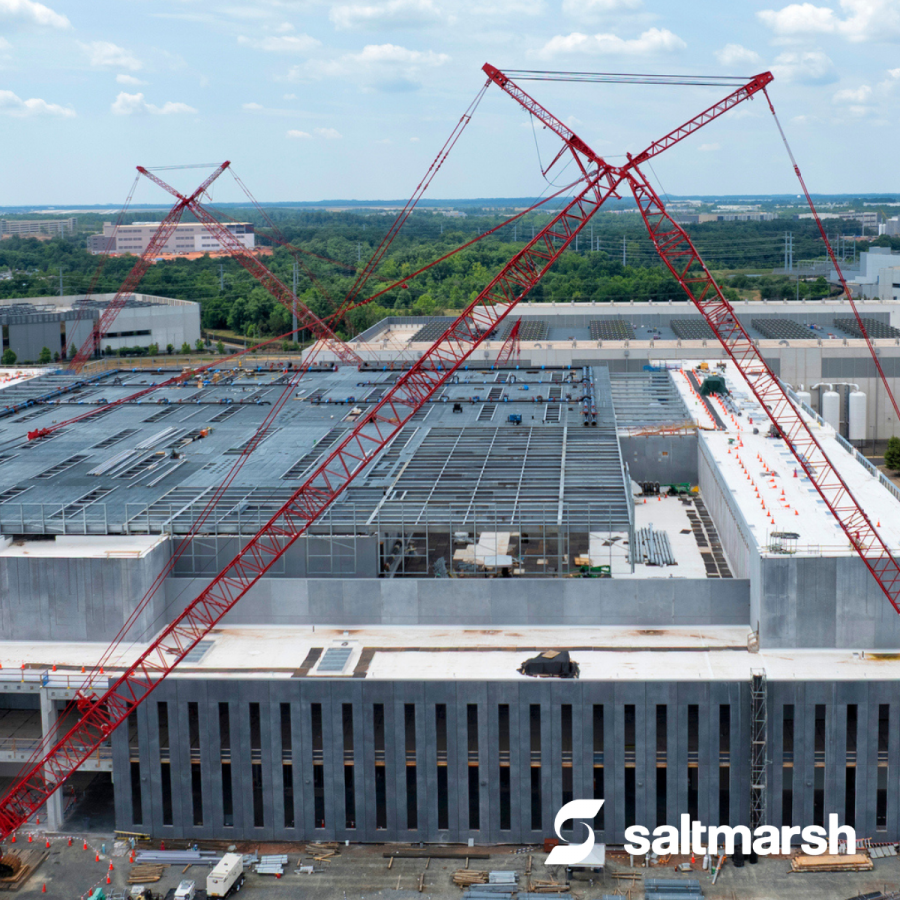
As data center development expands across the Southeast, contractors along the Gulf Coast, including the Pensacola region, should pay attention to the indirect and supporting opportunities created by this growth. The area is not primarily a hyperscale market, but it sits within a broader regional ecosystem tied to connectivity, resiliency, defense-related infrastructure, regional population growth, and digital redundancy.
That regional framing is no longer theoretical. Over the past several months, local economic development officials have confirmed active, on-the-ground interest from data center developers in Escambia County itself, which sharpens the opportunity for area contractors and shortens the timeline for getting positioned.
For local contractors, the opportunity is often less about chasing the largest nationally publicized campuses and more about preparing for work connected to site infrastructure, regional facilities, telecom hubs, utility expansion, and hardened construction. These project types can align well with small to midsized firms that have strong local execution capabilities and experience working in coastal environments.
Where Opportunities Are Emerging
Gulf Coast contractors may see opportunities in site development, land clearing, earthwork, grading, stormwater systems, underground utilities, electrical infrastructure, HVAC and mechanical systems, concrete, structural work, roofing, insulation, and building envelope scopes. These trades are all relevant to data center construction and to the supporting infrastructure that enables digital capacity.
The coastal environment also creates a practical advantage for firms that understand storm hardening, wind resistance, flood mitigation, moisture control, corrosion considerations, and resilient roofing or enclosure systems. These are not abstract concerns in the Gulf Coast market. They are operating realities, and they can become valuable differentiators when owners and general contractors evaluate subcontractor qualifications.
Recent Market Developments
Two developments since this piece was first published are worth flagging directly for Gulf Coast and Pensacola-area contractors.
Local Activity
Florida West Economic Development has confirmed it is in active negotiations with a data center company to build a facility of roughly a couple hundred thousand square feet somewhere in the middle of Escambia County. The organization's CEO has said five separate data center companies have inquired about siting in the county, and that the projects under discussion locally are smaller in scale rather than mega-campus developments. Site selection is expected to favor locations set back from residential density. Neighboring Santa Rosa County has indicated it is not currently pursuing a data center project.
This local interest has already generated public attention. A community petition and resident concerns have surfaced around power consumption, water usage, noise, and potential impacts on nearby military missions, including Naval Air Station Pensacola and Corry Station. Escambia County officials have emphasized that no deal is finalized and that any proposal would be evaluated on infrastructure demands, environmental considerations, and community impact. For contractors, this signals that permitting, siting, and public engagement will likely shape the pace and scope of any local project, and that mitigation and compliance-adjacent scopes described later in this piece may become directly relevant sooner than expected.
Statewide Regulatory Update
Florida enacted a new data center law, the Florida Hyperscale Data Center Act (SB 484), signed May 7, 2026 and effective July 1, 2026. The law applies to large-scale data centers with an anticipated peak load of 50 megawatts or more. It bars utilities from shifting data center-related electricity costs onto residential and small business ratepayers, preserves and clarifies local government authority over comprehensive planning, zoning, and siting decisions, and creates new consumptive-use water permitting requirements for qualifying large-scale facilities. Utilities must file related tariffs with state regulators by October 1, 2026.
Because the law reinforces local control over siting and adds water permitting steps for the largest projects, Gulf Coast contractors should expect Escambia and Santa Rosa County officials, and any general contractors bidding local work, to reference SB 484 directly during pre-development and permitting conversations. Firms that can speak knowledgeably about the law's local-authority and water-permitting provisions will be better prepared for early-stage client conversations.
How Pensacola-Area Firms Can Position Themselves
Because many data center projects are led by national or regional general contractors, local firms should focus on relationship building beyond the immediate Pensacola market. Contractors should identify general contractors active across North Florida, Alabama, Georgia, and the broader Southeast, then pursue prequalification, safety documentation, capability statements, and targeted outreach.
With a specific project now under active local negotiation, Pensacola-area firms have a nearer-term reason to move on this outreach. Getting in front of Florida West Economic Development, county staff, and any general contractor eventually selected for the Escambia County project, before a scope package is issued, is a more concrete near-term step than it was when this piece was first drafted.
Reliability will matter as much as price. General contractors in mission-critical construction value subcontractors that can mobilize crews, protect schedules, coordinate effectively, and maintain documentation. A small or midsized contractor that consistently delivers can become highly valuable, even if its first role is a limited scope or supporting package rather than a major contract.
Workforce, Financial Readiness & Internal Controls
Labor availability will be a central issue. The data center sector is already competing heavily for electricians, HVAC technicians, mechanical trades, and specialty workers. Pensacola-area firms should evaluate whether they have the workforce strategy needed to support fast-moving projects, including apprenticeships, training partnerships, retention plans, and trusted labor relationships.
At Saltmarsh, we also encourage contractors to look at the business side of readiness. Strong job costing, cash flow management, bonding capacity, contract review, insurance coordination, and project controls can help firms participate in larger and more complex work without taking on unnecessary exposure. This is especially important when working under national general contractors with more sophisticated contract requirements.
Compliance & IT Advisory Considerations
Data center-related work may bring expectations around documentation, vendor compliance, access management, cybersecurity awareness, and use of digital project systems. These requirements will vary by project, but contractors should be prepared for owners and general contractors to ask more questions about how information is managed and how access to systems is controlled.
For firms that have historically treated technology as a back-office function, this is a good time to evaluate IT controls, user access practices, data backup procedures, business continuity planning, and vendor management. These steps can improve operational resilience and may strengthen a contractor's ability to compete for more complex infrastructure work.
Community & Regulatory Factors
Community opposition to data centers has increased in many parts of the country, and the early public reaction to the Escambia County discussions shows the Gulf Coast is not insulated from it. Concerns raised locally so far track closely with national patterns: power consumption, water usage, noise, land use compatibility, and potential impacts on nearby residents and military operations.
SB 484 gives local governments clearer statutory footing to weigh those concerns, and it adds a dedicated water permitting track for large-scale facilities. Contractors should expect increased attention to permitting, environmental controls, site buffering, and mitigation as a routine part of any local project, not an exception.
This can create additional scopes of work. Sound barriers, landscaping, stormwater improvements, environmental protection, erosion control, and utility upgrades may all become part of the broader construction opportunity. Firms with strong compliance discipline and local permitting awareness may be better positioned to support these needs.
Key Takeaway for Gulf Coast Contractors
The Gulf Coast and Pensacola region may not become the largest data center hub, but with a specific project now in active negotiation in Escambia County, and a new state law shaping how these projects get sited and permitted, the market has moved from a general trend to a live, local opportunity. Contractors that invest in workforce development, operational discipline, resilient construction capabilities, and relationship building across the Southeast will be better positioned to capture emerging opportunities.
For small to midsized firms, the practical path is clear: become easier to trust, easier to qualify, and easier to work with on complex projects, and get in front of the local project team early. That is where the next wave of opportunity is likely to be won.
Explore Florida's Data Center Market
Data center development is reshaping construction opportunities across Florida, from emerging Gulf Coast markets to Tampa Bay and larger projects elsewhere in the state. Understanding where development is occurring, and how workforce, infrastructure, regulatory, and financial considerations vary by market, can help contractors prepare for what comes next.
For a broader look at Florida's data center landscape, read our Data Center Infrastructure Growth: Florida Statewide Market Outlook. For a closer look at Tampa Bay's emerging opportunities, see Data Center Infrastructure Growth: Tampa Market's Emerging Role.
About the Author | Stephen Reyes, CISA, CISSP
Stephen is a partner who leads across information technology services, IT compliance, and security audits. He began his career in technology consulting over 30 years ago and joined the firm in 1997.He holds multiple professional certifications, including Certified Information Systems Auditor (CISA), and Microsoft Certified Systems Engineer (MCSE), along with credentials from ISACA, Novell, Citrix, and CompTIA. Stephen specializes in IT compliance and security audits, system selection, implementation, and conversion. His extensive expertise helps clients align their technology infrastructure with operational and regulatory demands.
Related Posts
- Data Center Infrastructure Growth: Tampa Market's Emerging Role
- Data Center Infrastructure Growth: Gulf Coast Market Outlook
- Data Center Infrastructure Growth: Florida Statewide Market Outlook
- IRS Ends First-Time Abate: What Construction Companies Need to Know
- Closing Time: What Contractors Need to Know About Month- and Year-End Close
- Expert Tips to Maximize Your Construction Job Schedule for Profitability
- Summer Outreach Heats Up
- Real Estate Accounting Services for Cash Flow Visibility and Portfolio Performance
- Cost Forecasting for Contractors
- Avoid Costly Bookkeeping Mistakes in Your Construction Projects
- How Does a Construction Bond Work?
- Construction Cost Accounting for Commercial Contractors
- Fueling Contractor Growth with Accounting Insights
- Margins & Mindset: A Contractor's Guide to Smarter Financial Growth
- Construction Accounting Methods Explained: Cash, Accrual, and Percentage-of-Completion
- Stop the Profit Leaks: 6 Gut checks for Contractors
- A Practical Guide to Construction Job Costing for Contractors
- WIP Construction Accounting: How to Read and Use a Work-in-Progress Report
- Saltmarsh Leader Suzanne Bach Joins ABC Florida Gulf Coast Board
- Job Schedules 101: A Smarter Way to Strengthen Construction Finances
- A Quick Guide to Percent of Completion for Long-Term Construction Contracts
- Four Metrics Your Construction Company Should Start Tracking Today
- WEBINAR: Horror Stories in Employee Safety/Risk Management
- White Paper: Manufacturing Outlook, Leveraging Technology Today
- Webinar Materials: The Cost of Attracting & Retaining Talent in Today's Market
- View All Articles