Data Center Infrastructure Growth: Tampa Market's Emerging Role
9/16/2026 - By Stephen Reyes
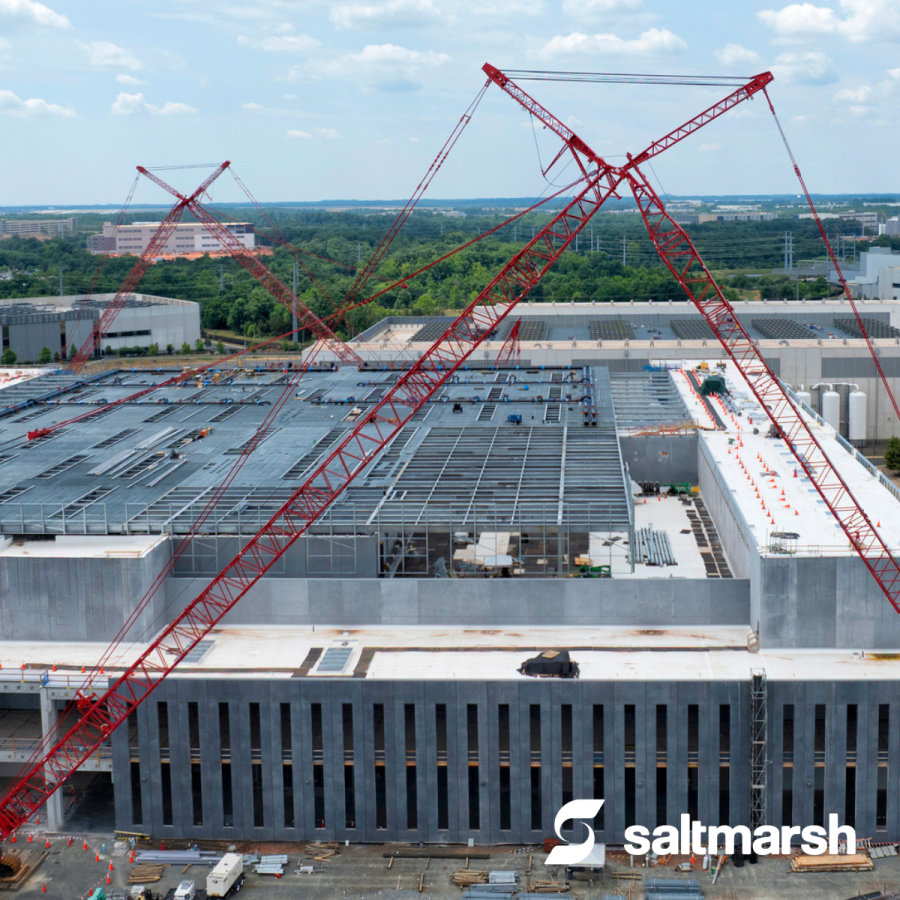
The Tampa Bay region is increasingly relevant to the Southeast's expanding data center landscape. While it is not yet a primary hyperscale hub, Tampa market growth, connectivity, enterprise base, and business environment position it as a meaningful market for regional facilities, edge computing, colocation, redundancy, and supporting infrastructure.
As demand for digital infrastructure continues to grow, development will not be limited to the country's largest historical markets. Secondary and regional markets that can support connectivity, resiliency, and local demand are becoming more important. For Tampa contractors, that creates a timely opportunity to evaluate how their capabilities align with data center-related construction, and recent activity across the Tampa Bay and Central Florida corridor suggests that opportunity is accelerating.
Market Opportunity for Contractors
Data center construction requires a wide range of trade participation. Tampa-based firms may find opportunities in electrical, mechanical, HVAC, plumbing, site development, underground utilities, concrete, structural systems, roofing, envelope work, interiors, specialty trades, controls, and supporting infrastructure.
Mechanical and electrical scopes receive particular attention because data centers depend on reliable power and cooling. However, firms should not overlook the broader set of packages required to prepare sites, harden facilities, manage drainage, protect the building envelope, support equipment, and meet schedule milestones. This creates meaningful opportunities for small to midsized firms that can execute specialized scopes well.
Recent Market Developments
Several developments over the past few months point to real momentum in and around the Tampa Bay market, at both the edge and hyperscale ends of the spectrum.
Edge Activity in Pinellas Park
American Tower has submitted a proposal to Pinellas Park officials to build a small-scale Edge data center on the city's northwestern edge, near Belcher Road. City staff have described the project as still in a pre-development, exploratory stage, with at least two public meetings required before any approval. The filing follows American Tower's earlier announcement of plans to develop a facility in the broader Tampa area, and reflects continued interest in smaller, connectivity-focused facilities closer to the urban core, a scale of project that tends to draw heavily on local trades.
Hyperscale Momentum Nearby in Fort Meade
In April 2026, Fort Meade city commissioners in Polk County unanimously approved a developer agreement for what is being described as Florida's first hyperscale data center, a roughly $2.6 billion project planned on more than 1,100 acres just west of U.S. 98. The project still requires additional permits before construction can begin, and it has drawn sustained community opposition, with residents saying they felt the approval moved faster than expected. For Tampa Bay-area contractors, a project of this scale on the I-4 corridor is likely to draw regional subcontractor teams and is worth tracking as a near-term source of trade-package opportunities.
Positioning for Success in Tampa
Contractors should engage early with developers, national general contractors, regional builders, and design partners active across Central Florida and the broader Southeast. Prequalification will be important, but so will reputation. Firms that can demonstrate safety performance, schedule reliability, workforce depth, and quality documentation will stand out.
Because project teams are often assembled earlier in the process for mission-critical work, contractors should not wait until bid day to become visible. With both an active Edge proposal in Pinellas Park and a large hyperscale project moving through permitting in Polk County, there are now two concrete, differently scaled entry points for Tampa-area firms to track. A concise capability statement, trade-specific experience, safety metrics, bonding information, and examples of relevant resilient or infrastructure work can help create a stronger first impression with either type of project team.
Workforce & Capacity Challenges
Tampa is already an active construction market, which means competition for labor can be intense. Data center construction adds pressure because it requires skilled trades, especially electrical, HVAC, mechanical, and controls experience. Contractors with a stable workforce, strong foremen, training pipelines, and scalable staffing strategies will be better positioned to meet project needs.
Workforce readiness is not only a field issue. It affects estimating, scheduling, cash flow, safety, and customer confidence. Firms that bid work without a realistic labor strategy risk schedule problems, margin erosion, and reputational damage. Firms that plan ahead are more likely to become repeat partners.
Risk, Compliance & Operational Considerations
At Saltmarsh, we see data center-related work as both a growth opportunity and a risk-management challenge. These projects can involve sophisticated owners, tight contractual requirements, complex documentation, and performance expectations that may exceed those found in traditional commercial construction.
Contractors should evaluate their contract review process, insurance and bonding readiness, job costing, change order controls, project reporting, and internal financial visibility. These systems help leaders understand whether growth is profitable and whether risk is being managed appropriately.
Technology & Cybersecurity Expectations
Large infrastructure projects increasingly rely on digital collaboration platforms, controlled access to project information, vendor onboarding, and documentation workflows. Contractors may be asked to demonstrate basic technology maturity, including access controls, data protection practices, backup procedures, and cybersecurity awareness.
These expectations may not be the primary reason a contractor wins work, but weak IT and compliance practices can create friction during qualification or execution. Contractors that strengthen these areas now may improve both operational resilience and market credibility.
Community & Regulatory Factors
Tampa and the surrounding region are already experiencing the community scrutiny described in the original version of this piece. The Fort Meade approval in Polk County drew significant resident pushback despite passing unanimously, and coverage of that project has noted concerns about energy consumption, environmental impact, water usage, noise, and utility strain, echoing patterns seen in other markets.
SB 484 now gives local governments in the region clearer statutory authority to weigh those concerns and adds a dedicated water permitting track for large-scale facilities. For contractors, this may result in additional requirements around environmental mitigation, sound control, landscaping, infrastructure upgrades, site buffering, and compliance documentation. Firms with experience navigating local permitting and executing mitigation-related scopes may find additional opportunities as more projects move through approval in the region.
Key Takeaway for Tampa Contractors
Tampa is well positioned to benefit from the continued expansion of data center infrastructure across the Southeast, and that expansion is no longer just a regional trend on paper. An active Edge proposal in Pinellas Park, a $2.6 billion hyperscale project moving through permitting in nearby Polk County, colocation expansion in Tampa itself, and a new statewide regulatory framework all point to a market that is entering an execution phase.
For small to midsized construction firms, success will depend on preparation. Contractors that strengthen relationships, workforce depth, project controls, IT readiness, and compliance discipline will be better positioned to participate in this evolving market.
Looking Beyond Tampa
The opportunities and challenges surrounding data center development extend well beyond the Tampa Bay region. As Florida continues to attract investment in digital infrastructure, contractors across the state will need to navigate the same questions around workforce capacity, project risk, infrastructure demands, regulatory requirements, and financial readiness.
For a broader look at the forces shaping Florida's data center market and what contractors should consider as development accelerates read our related article, Data Center Infrastructure Growth: Florida Statewide Market Outlook.
About the Author | Stephen Reyes, CISA, CISSP
Stephen is a partner who leads across information technology services, IT compliance, and security audits. He began his career in technology consulting over 30 years ago and joined the firm in 1997.He holds multiple professional certifications, including Certified Information Systems Auditor (CISA), and Microsoft Certified Systems Engineer (MCSE), along with credentials from ISACA, Novell, Citrix, and CompTIA. Stephen specializes in IT compliance and security audits, system selection, implementation, and conversion. His extensive expertise helps clients align their technology infrastructure with operational and regulatory demands.
Related Posts
- Data Center Infrastructure Growth: Tampa Market's Emerging Role
- Data Center Infrastructure Growth: Gulf Coast Market Outlook
- Data Center Infrastructure Growth: Florida Statewide Market Outlook
- IRS Ends First-Time Abate: What Construction Companies Need to Know
- Closing Time: What Contractors Need to Know About Month- and Year-End Close
- Expert Tips to Maximize Your Construction Job Schedule for Profitability
- Summer Outreach Heats Up
- Real Estate Accounting Services for Cash Flow Visibility and Portfolio Performance
- Cost Forecasting for Contractors
- Avoid Costly Bookkeeping Mistakes in Your Construction Projects
- How Does a Construction Bond Work?
- Construction Cost Accounting for Commercial Contractors
- Fueling Contractor Growth with Accounting Insights
- Margins & Mindset: A Contractor's Guide to Smarter Financial Growth
- Construction Accounting Methods Explained: Cash, Accrual, and Percentage-of-Completion
- Stop the Profit Leaks: 6 Gut checks for Contractors
- A Practical Guide to Construction Job Costing for Contractors
- WIP Construction Accounting: How to Read and Use a Work-in-Progress Report
- Saltmarsh Leader Suzanne Bach Joins ABC Florida Gulf Coast Board
- Job Schedules 101: A Smarter Way to Strengthen Construction Finances
- A Quick Guide to Percent of Completion for Long-Term Construction Contracts
- Four Metrics Your Construction Company Should Start Tracking Today
- WEBINAR: Horror Stories in Employee Safety/Risk Management
- White Paper: Manufacturing Outlook, Leveraging Technology Today
- Webinar Materials: The Cost of Attracting & Retaining Talent in Today's Market
- View All Articles